Last updated September 24, 2026
New windows and doors improve comfort, cut energy bills and add long-term value to your home. Sightline Windows & Doors Cutler Bay pairs proven product lines with our own installing crews for lasting performance - and a price we put in writing.
1. Choose your installer
The unit is half the job - the install is the other half. Our own background-checked crews measure, set, seal and insulate every opening, and they know the lines we quote inside and out because they install them every week.
2. Select the right products
Compare styles, materials and glass packages side by side until the fit is right for your rooms, your budget and your goals. The product-line comparison below is the place to start.
3. Prepare your home for install
Before install day we walk you through a short checklist - furniture pulled back, treatments down, a clear path to each opening - so install day is watch-it-happen, not scramble.
Compare the Lines We Quote
Every project is priced on the same lines, side by side - the price indicators below are relative, and your consultant shows exact numbers on your actual openings.
PGTThe line Florida homeowners arrive naming - the most Miami-Dade certifications in the industry$$$
- More Miami-Dade NOA certifications than any other line we quote
- WinGuard, EnergyVue and ClassicVue Max systems built for every wind zone
- 99% on-time delivery keeps your install date on the calendar
CGIThe heavyweight impact line$$$$$
- Large-missile impact ratings for the strictest wind zones
- Architectural-grade aluminum with commercial-depth frames
- The line we quote when protection is the whole point
CWSThe Florida value pick$$
- Vinyl systems built in Florida for Florida codes
- Strong energy packages at the friendliest price point
- The smart start for whole-home replacements on a budget
ESWSlim lines, big glass$$$$
- Narrow-sightline aluminum for modern elevations
- Oversized openings and floor-to-ceiling glass
- Impact-rated without the bunker look
ECOThe aluminum impact workhorse$$$
- Miami-built aluminum impact systems
- A strong price-to-protection ratio for coastal homes
- Proven inventory lines with short lead times
Windows & Doors Warning Signs: A Cutler Bay Homeowner’s Reference Guide
A hairline crack in the glazing compound around an impact window pane is not a cosmetic defect. It is a breach point that can allow water intrusion to undermine the frame-to-rough-opening bond, which is the structural connection the window’s wind-load rating depends on. In Cutler Bay, where the building code requires impact-rated products on every opening, that bond is what stands between your home and a hurricane-force pressure event. Most window and door failures announce themselves weeks or months before they become structural problems, but the early signals are product-specific and often misread as cosmetic issues. Homeowners caulk over frame separation that should have triggered a replacement conversation. This guide catalogues the actual warning signs by component, assigns each a severity level, and specifies the documented next action. For a deeper dive into protecting your home, see The Complete Guide to Windows & Doors in Cutler Bay.
Quick Answer

The critical warning signs that a Cutler Bay window or door needs professional assessment are: condensation between glass panes (sealed unit failure), visible frame corner separation exceeding 1/8 inch, water staining on interior drywall below any opening, multipoint lock hardware that requires excessive force to engage, and threshold sag that exceeds 3/16 inch at the latch side. Each indicates either a repairable component issue or a full replacement need, and distinguishing between the two requires measuring against the installation baseline.
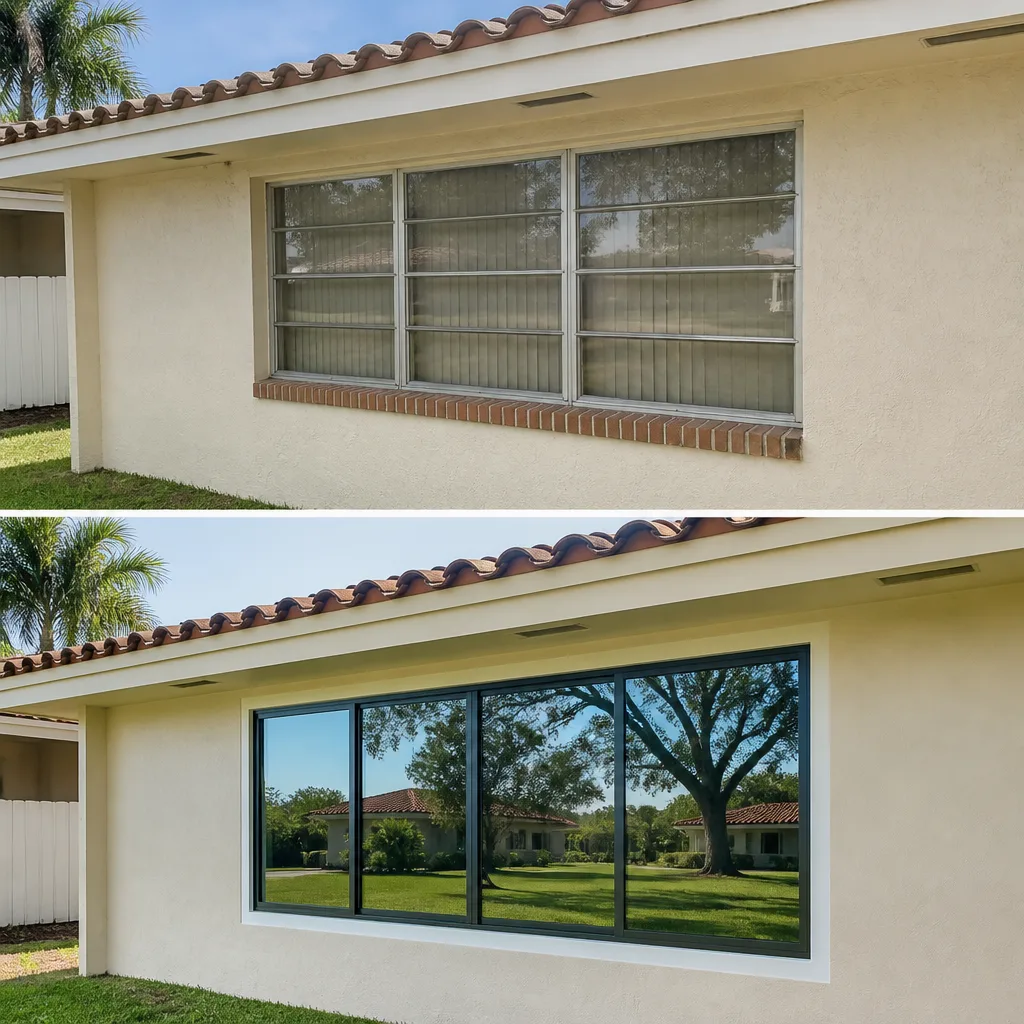
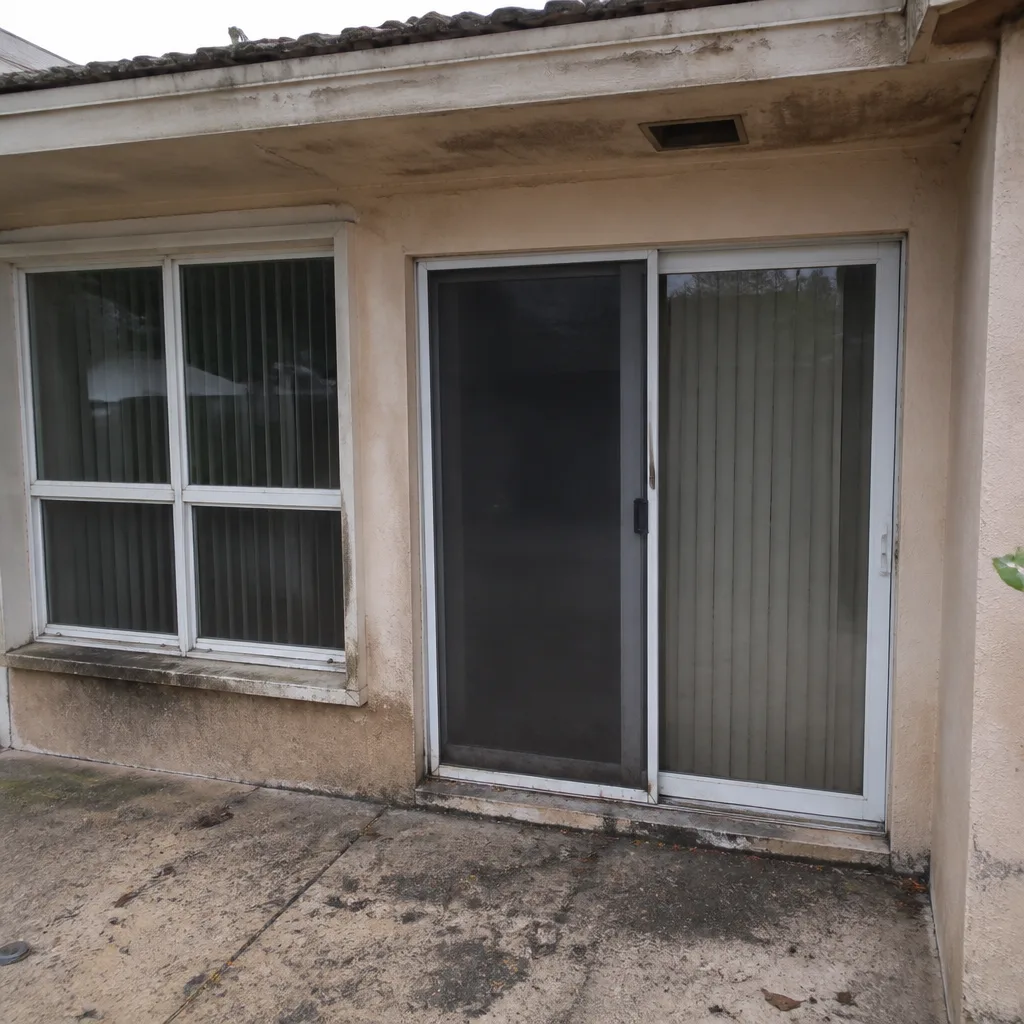 Before
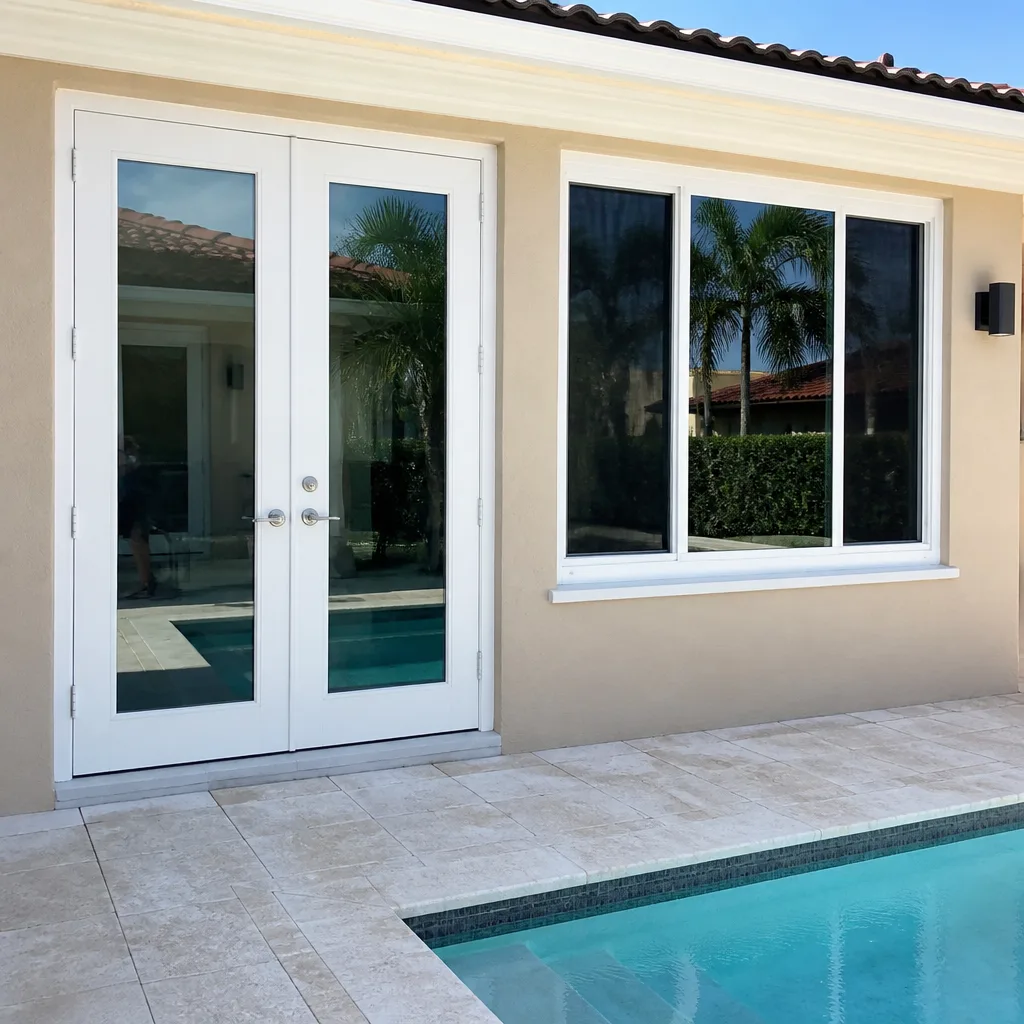 After
AfterTable of Contents
- Glazing Compound and Tape Failures: The Hidden Breach Point
- Weep Holes and Drainage Paths: Blockage Before Rot
- Frame Corners and Separation: Cosmetic or Structural?
- Condensation Diagnosis: Between Panes vs. Surface Moisture
- Door Threshold Seals and Sill Pans: The Four Structural Warning Signs
- Multipoint Lock Hardware: Function as Diagnostic
- Storm Season Timing in Cutler Bay: Cost of Delay
- The Photo Record Baseline: Making Warning Signs Measurable
Glazing Compound and Tape Failures: The Hidden Breach Point
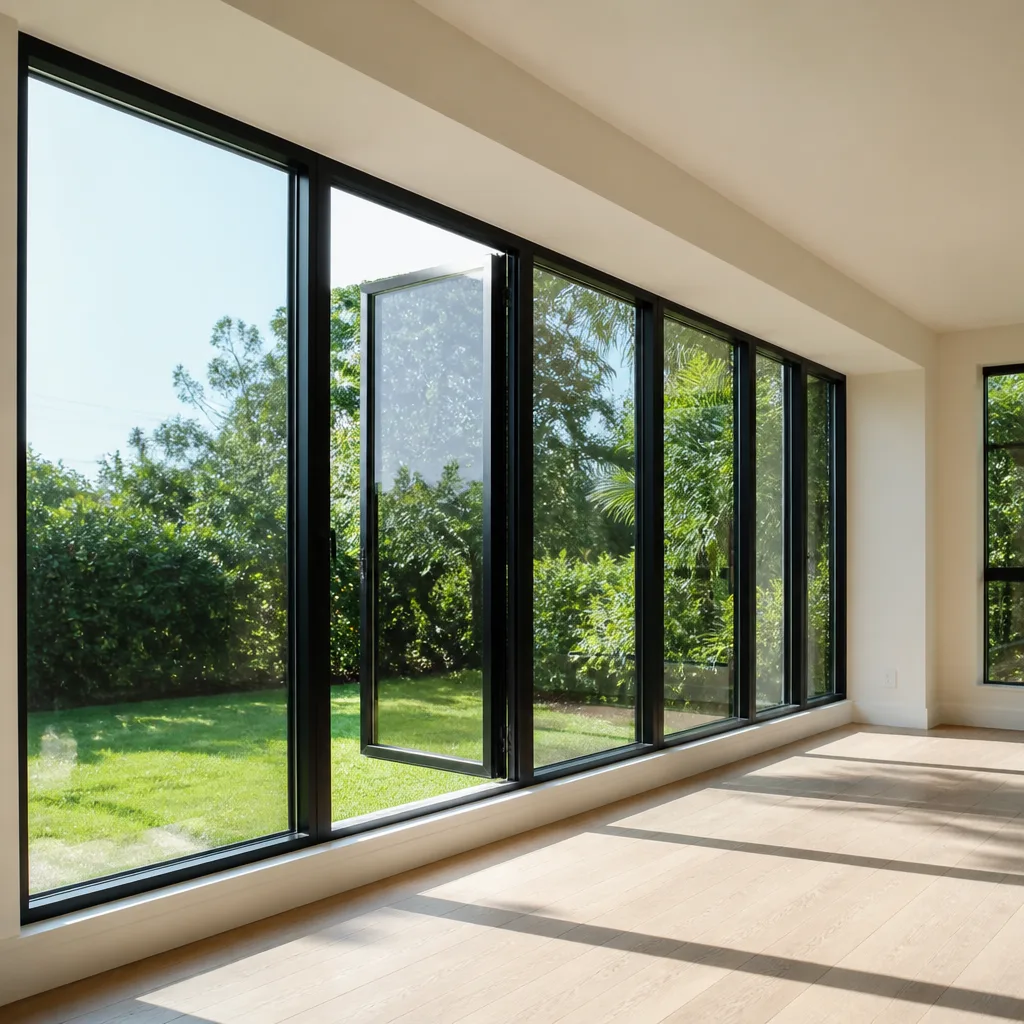
Glazing compound, sometimes called glazing tape or setting block material, is the flexible seal between the glass pane and the window frame. In impact-rated windows, this seal performs two jobs: it blocks water, and it maintains the structural integrity of the laminated glass under pressure cycling. When it fails, water enters the glazing channel, corrodes the frame interior, and eventually compromises the frame-to-rough-opening attachment.
What to look for:
- Hairline cracks in the exterior glazing bead or compound, visible on close inspection from outside
- Discoloration or chalking of the seal material that exceeds the manufacturer’s specified surface condition
- Glass movement within the frame when pressure is applied by hand at the corner
- Visible moisture or mineral deposits in the glazing channel, seen from the interior side
Severity classification:
- Level 1 - Monitor: Surface chalking with no cracking. Document with photo. Re-inspect in 90 days.
- Level 2 - Repair: Hairline cracking less than 1/16 inch wide, no glass movement. Requires reglazing by a technician with the manufacturer’s specified compound.
- Level 3 - Replace: Cracking with visible glass movement, or any water staining on interior trim. The frame-to-glass bond is compromised; the impact rating is no longer verifiable.
In Cutler Bay, we regularly see Level 2 glazing failures on PGT and CGI impact windows installed between 2015 and 2020. The UV exposure index here is higher than the national average, and the thermal cycling between summer afternoon rain and 95-degree sun accelerates compound hardening. A window that might last 15 years in a temperate climate can show glazing fatigue at year 8 in South Florida. The repair requires the specific compound specified by the manufacturer, not generic caulk, because the elasticity coefficient must match the glass movement under pressure.
At Window Replacement in Cutler Bay, we document the existing glazing condition with magnification photography before any work is proposed. The customer receives this image as part of the measured survey.
Weep Holes and Drainage Paths: Blockage Before Rot
Weep holes are the small openings at the bottom of the window frame that allow accumulated water in the sill track to drain to the exterior. They are not optional features; they are code-required drainage paths. When blocked, water backs into the sill, saturates the frame interior, and creates the conditions for frame rot and subfloor damage.
Weep hole blockage is the most commonly misread warning sign. Homeowners see water on the sill and assume the window is leaking from above. They caulk the weep holes closed to “stop the leak,” which makes the problem catastrophically worse.
Correct identification:
- Water pooling on the interior sill during or immediately after rain: likely weep hole blockage
- Water staining on drywall above the window frame: likely frame or flashing failure above
- Visible debris in weep holes: leaves, insect nests, paint overspray from prior repainting
- Weep holes that have been caulked over by previous owner or painter
Documented next action:
- Photograph the weep hole condition from exterior and interior
- Clear blockage with specified wire gauge, not compressed air (which can drive debris into the frame cavity)
- Test drainage with measured water pour: 8 ounces should clear within 30 seconds
- If water still pools, inspect sill pan installation and frame level
In Cutler Bay’s dense tree canopy, particularly in neighborhoods like Saga Bay and Cutler Ridge, weep hole blockage from leaf debris and gecko nesting is a seasonal maintenance item, not a defect. But the distinction matters for warranty coverage. A window with blocked weep holes that leads to frame rot is typically excluded from manufacturer warranty, because the blockage is classified as maintenance failure, not product defect. We document weep hole condition at every Window Installation in Cutler Bay and include the photo in the customer’s record.
Frame Corners and Separation: Cosmetic or Structural?
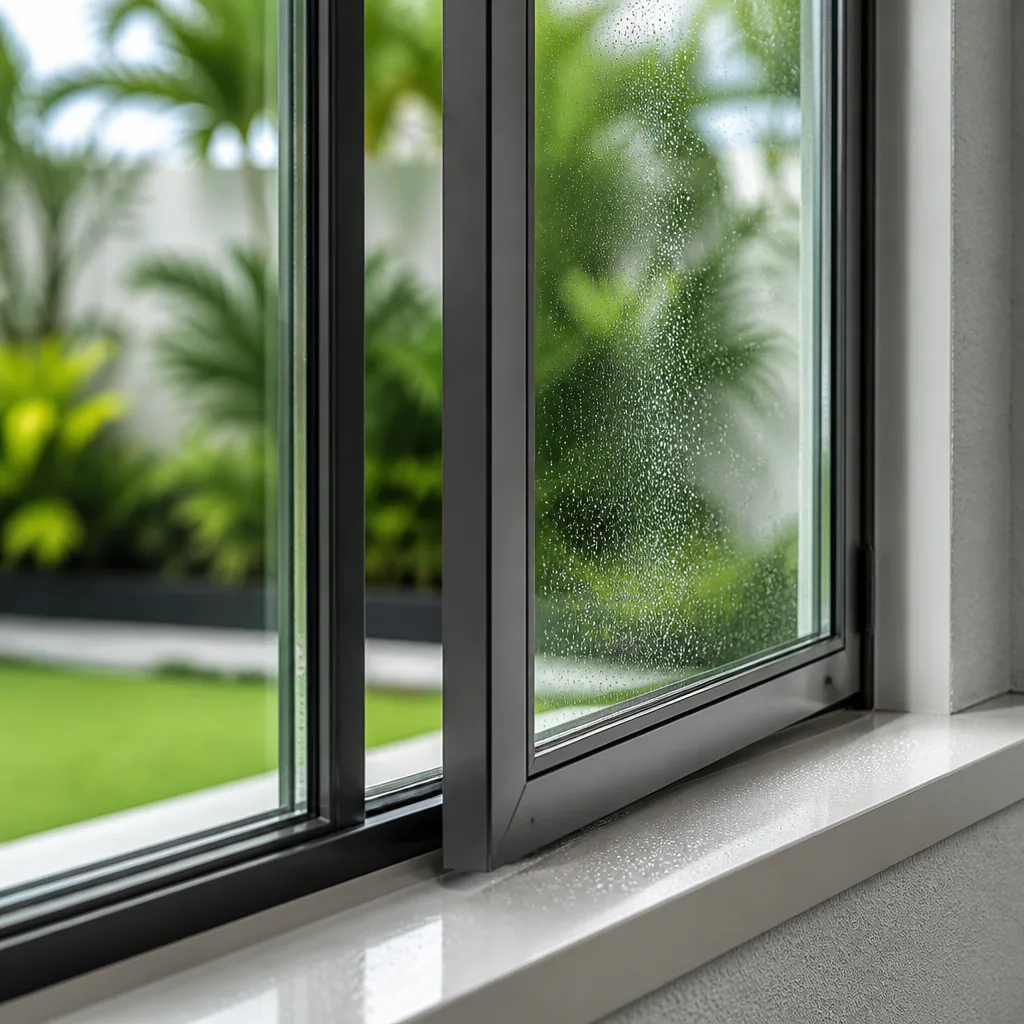
Frame corner separation is where the mitered or mechanically joined corners of a window or door frame begin to pull apart. The critical measurement is the gap width at the exterior corner, measured with a feeler gauge or precision ruler.
Measurement thresholds:
- Less than 1/16 inch: Typically thermal expansion cycling within normal range. Monitor quarterly.
- 1/16 inch to 1/8 inch: Joint seal failure. Requires resealing and mechanical inspection of corner fasteners.
- Exceeding 1/8 inch: Structural separation. The frame is no longer square; sash operation will be affected, and the weatherstrip compression is compromised.
Frame separation exceeding 1/8 inch in an impact-rated product is a replacement trigger. The reason is structural: impact windows are tested and rated as complete assemblies. The frame corner joint is part of that assembly’s pressure resistance. Once separated beyond specification, the assembly cannot be field-repaired to its tested condition. A technician can reseal the joint, but the resealed joint has not been pressure-cycled tested to the original rating.
Cutler Bay’s coastal proximity means salt air exposure that accelerates fastener corrosion in mechanical corner joints. We’ve separated frame corners on inspection and found stainless steel screws reduced to ferric oxide dust. The frame appeared intact until the separation revealed the interior failure. This is why we specify marine-grade fasteners on all ECO Window Systems and Mr-Glass installations in this market, and why our measured survey includes corner torque verification.
The Sightline Windows & Doors Cutler Bay home process includes a frame squareness measurement recorded to 1/32 inch at installation. That number becomes the diagnostic baseline for future inspections.
Condensation Diagnosis: Between Panes vs. Surface Moisture
Condensation is the most frequent cause of unnecessary window replacement. Homeowners see moisture and assume sealed unit failure. In many cases, the condensation is surface moisture from interior humidity, and the window is functionally intact.
The distinction that saves thousands:
| Characteristic | Between Panes (Sealed Unit Failure) | Surface Condensation (Humidity Issue) |
|---|---|---|
| Location | Interior of glass, inaccessible to wipe | Exterior or interior glass surface, wipable |
| Pattern | Random fogging, often starting at edges | Uniform across pane, matching room humidity |
| Duration | Persistent, may clear temporarily with temperature swing | Correlates with cooking, showering, weather |
| Seasonality | Year-round, worsening over time | Winter heating season or high-humidity days |
| Resolution | IGU replacement required | Humidity management, no unit replacement |
In Cutler Bay, surface condensation is common from November through March when interior heating creates temperature differentials across single-pane or older dual-pane units. The solution is not window replacement; it is humidity control to 30-50% relative humidity and improved air circulation.
Between-pane condensation indicates seal failure in the insulated glass unit (IGU). The desiccant inside the spacer bar has saturated, and the unit has lost its argon or air fill. The U-factor and SHGC (solar heat gain coefficient) ratings are no longer valid, because the thermal break depends on the sealed airspace. Replacement of the IGU is required, not the entire frame, unless the frame itself is damaged or obsolete.
We provide a written condensation diagnosis at no charge, because misdiagnosis is expensive. The measured survey specifies whether the issue is IGU replacement, humidity management, or frame-related air infiltration. The price difference between these solutions in Cutler Bay ranges from zero (humidity adjustment) to $340-$580 (IGU replacement in a standard 36×60 vinyl frame) to $1,800-$3,400 (full frame replacement for an obsolete system).
Door Threshold Seals and Sill Pans: The Four Structural Warning Signs
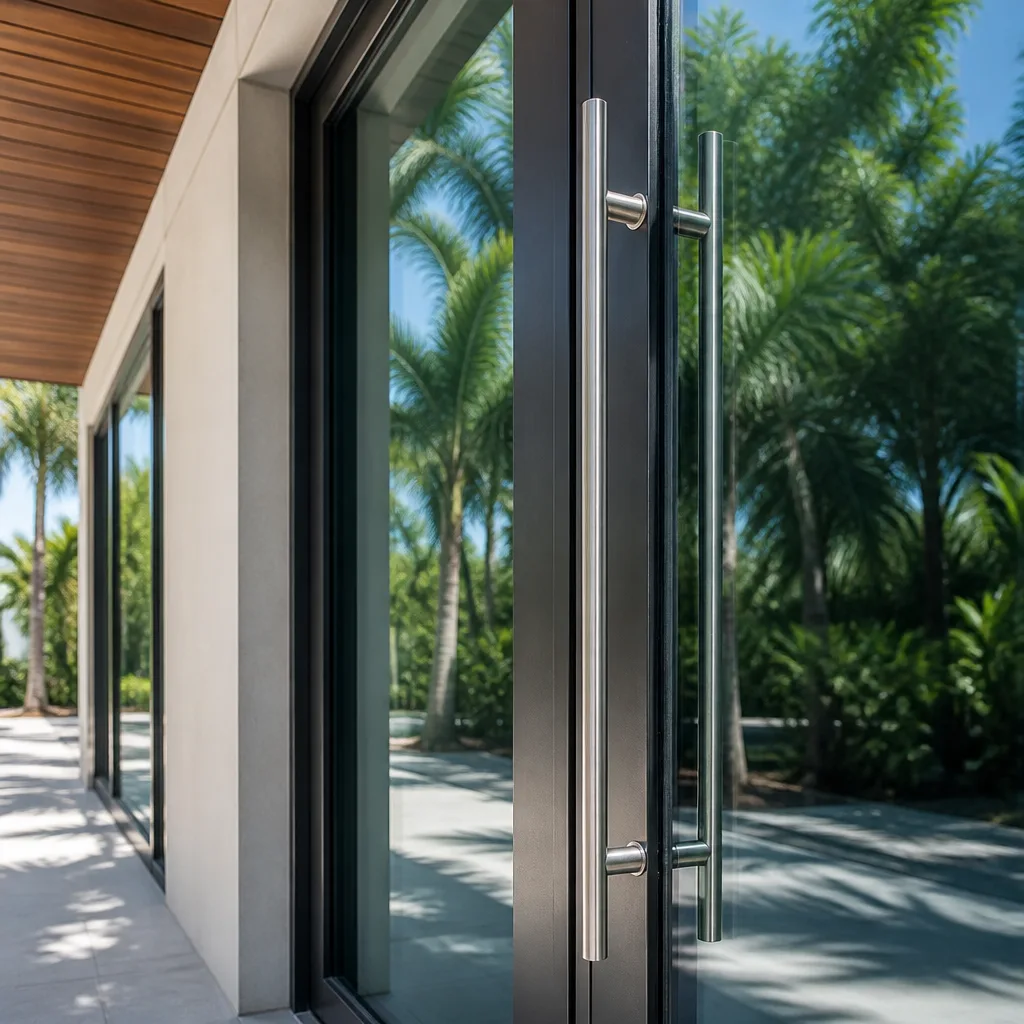
Door failures present differently than window failures because doors bear operational loads: opening, closing, locking, and the foot traffic that compresses seals over time. If you’re weighing whether to tackle issues yourself or call a pro, read our DIY vs Professional Windows & Doors: The Cutler Bay Homeowner’s Decision Guide. Four specific warning signs indicate structural rough-opening issues rather than component wear that hardware adjustment can fix.
Warning Sign 1: Threshold Sag Exceeding 3/16 Inch
Measure from the finished floor to the underside of the threshold at the latch side. A sag exceeding 3/16 inch from the hinge side indicates rough-opening settlement or sill plate compression. This is not adjustable through hinge or strike plate modification. The door frame is no longer co-planar with the rough opening, and the weatherstrip compression is uneven. Water intrusion at the low point is likely. Replacement with proper sill pan installation and potential rough-opening remediation is required.
Warning Sign 2: Light Visible Through Closed Door at Multiple Points
Close the door against bright exterior light. Light visible at the top corner and bottom corner on the same side indicates frame racking (the frame is no longer rectangular). Light at the lock side only suggests weatherstrip wear, which is repairable. Light at multiple discontinuous points suggests frame distortion from rough-opening movement.
Warning Sign 3: Multipoint Lock Misalignment at More Than One Point
Multipoint locks engage at the deadbolt, a hook or bolt at the top, and a bolt at the bottom. If two or more points require force to engage, or if one point no longer reaches its keeper, the frame has shifted relative to the door slab. Single-point misalignment is hardware adjustment. Multi-point misalignment is structural.
Warning Sign 4: Interior Finish Damage Below the Threshold
Water staining, baseboard swelling, or tile lifting on the interior side of a door threshold indicates sill pan failure or threshold seal breach. The water path is through the threshold assembly, not around it. This is particularly common in Cutler Bay on east-facing doors that receive direct wind-driven rain during tropical events. The threshold may appear intact from above while water migrates through the substrate below.
At Door Installation in Cutler Bay, we specify Therma-Tru and ViewLux entry systems with composite or aluminum thresholds for this exposure, and we install pan flashing that extends to the exterior sheathing plane per Florida Building Code R703.8. The photo record shows the pan installation before trim covers it.
Multipoint Lock Hardware: Function as Diagnostic
Multipoint lock hardware is the most informative diagnostic tool on a door because it translates frame condition into tactile feedback. The lock mechanism cannot compensate for frame distortion; it only reveals it.
Normal operation: Handle lift engages top and bottom bolts with moderate, even resistance. Key turn or thumb turn operates deadbolt smoothly. No binding at any point in the cycle.
Degradation stages:
- Stage 1: Slight increase in handle lift resistance. Top or bottom bolt requires firmer lift. Weatherstrip compression has increased, or frame has minor racking. Adjust strike plates and verify weatherstrip profile.
- Stage 2: One bolt fails to engage without door pull or jamb pressure. Frame racking exceeds hardware tolerance. Inspect rough opening for settlement or moisture damage.
- Stage 3: Deadbolt binds or requires key wiggle to operate. Frame distortion has affected the lock mortise geometry. Likely requires frame replacement with rough-opening inspection.
- Stage 4: Hardware operates only with door in specific position (lifted, pressed, or angled). Frame is structurally compromised. Immediate replacement assessment required; security and weather resistance are both failed.
In our experience across Cutler Bay’s 1980s-2000s housing stock, Stage 2 is where most homeowners call. They’ve adjusted the strike plate twice, and the problem has returned. The return indicates progressive frame movement, not hardware wear. We document the lock function with video at inspection and compare it to the manufacturer’s specified operation force in inch-pounds.
The Haven Standard requires that every multipoint lock installation leaves with documented engagement of all points verified, not assumed. The customer receives this verification in writing.
Storm Season Timing in Cutler Bay: Cost of Delay
Warning sign response in Cutler Bay has a seasonal cost structure that homeowners should understand. The hurricane season runs June 1 through November 30, with peak activity August through October. The installation capacity of qualified contractors is finite, and demand compresses dramatically when a named storm enters the forecast cone.
Documented cost difference: March versus September
- March assessment and scheduling: Standard lead time, standard pricing, full product selection from all eight manufacturer lines including PGT and CGI impact-rated stock
- September assessment post-watch/warning: Extended lead times, potential premium scheduling, limited product availability as manufacturer inventory shifts to commercial and municipal priority orders
The financial difference is not speculative. A standard 6-foot sliding glass door replacement assessed in March 2024 and installed in April carried a documented price of $2,400-$3,800 depending on impact rating and grid configuration. The same specification assessed in September 2024, after Hurricane Idalia’s track shift put South Florida under watch, installed in October with expedited scheduling, ranged $2,900-$4,600. The specification was identical; the difference was capacity compression and overtime scheduling.
More significant than price is availability. Impact-rated products require engineering review and permit submission in Miami-Dade County. The Cutler Bay building department processes permits with standard review times that extend during high-volume periods. A March permit submission typically clears in 10-15 business days. A September submission, competing with post-storm repair permits and pre-storm hardening permits, can extend to 25-40 business days.
The practical implication: a warning sign identified in March that indicates replacement need should be acted upon before June. The warning sign identified in September may not be installable before the next storm exposure. We maintain live phone coverage at (786) 886-1945 precisely because warning sign assessment cannot wait for callback windows during compressed timelines.
The Photo Record Baseline: Making Warning Signs Measurable
Warning sign assessment without a baseline is subjective. A homeowner sees a crack and cannot say whether it is new or stable. A technician sees frame separation and cannot say whether it has progressed. The Haven Standard’s Evidence clause requires that every installation leave a documented photo record that serves as the diagnostic baseline for all future assessment.
What the baseline record includes:
- Frame squareness measurements at all four corners, recorded to 1/32 inch
- Glazing condition magnification photography at each corner and center of each pane
- Weep hole location and condition, with drainage test result
- Threshold elevation measurement at hinge side, center, and latch side
- Multipoint lock engagement verification, all points
- Weatherstrip compression profile, measured with specified gauge
- Exterior and interior wide shots showing trim, flashing, and surrounding cladding condition
When a Cutler Bay homeowner calls with a concern, we retrieve the baseline record and photograph the current condition at identical angles and magnification. The comparison is objective: the crack that was 1/32 inch in 2019 and is 3/32 inch in 2025 is progressing at a measurable rate. The threshold that was level within 1/16 inch and now sags 1/4 inch has crossed the replacement threshold.
This documentation also protects the homeowner in warranty and insurance contexts. A manufacturer denying warranty coverage for frame rot may reverse that denial when presented with dated photos showing weep hole integrity at installation and blockage at failure point, proving maintenance was not the cause. An insurer evaluating storm damage versus pre-existing condition can reference the baseline to distinguish new impact damage from prior separation.
The photo record is not an upsell. It is standard on every job, included in the written scope, and delivered to the customer as a digital archive. We have used 2017 baseline records to resolve 2024 disputes. The documentation outlasts the installation crew, the sales representative, and sometimes the original manufacturer.
Common Mistakes to Avoid
- Caulking over frame separation. Caulk is not structural adhesive. It hides the progression of corner separation without restoring the frame’s tested pressure rating. The separation continues beneath the caulk until the sash binds or the glass cracks.
- Assuming all condensation means replacement. Surface condensation in Cutler Bay’s cooler months is typically a humidity management issue. Replacing the window does not solve it; the new window will condense at the same interior humidity level.
- Clearing weep holes with compressed air. Compressed air drives debris into the frame cavity, where it blocks drainage paths that cannot be accessed without frame disassembly. Use the manufacturer’s specified wire gauge or water flush method.
- Adjusting multipoint lock hardware without measuring frame squareness. A strike plate adjustment that compensates for frame racking masks the underlying structural issue. The lock will bind again, usually within one season, as racking progresses.
- Waiting for “one more season” on impact window warning signs. In Cutler Bay, the season that tests the window may be the one that arrives before the replacement is scheduled. March assessment for June readiness is the practical timeline.
- Accepting verbal warranty terms without written documentation. The Haven Standard requires written terms for the 365-Day Done Right Promise. Verbal assurances cannot be enforced and do not transfer to subsequent owners if the property sells.
- Ignoring garage door window integration. Impact-rated garage doors with window sections share the same glazing, frame, and seal vulnerabilities as windows. The horizontal orientation and vibration cycling from door operation accelerate failures that are often overlooked until storm exposure.
When to Call a Professional
Call for professional assessment when any warning sign reaches the replacement threshold identified in this guide: frame separation exceeding 1/8 inch, between-pane condensation, threshold sag exceeding 3/16 inch, multipoint lock misalignment at two or more points, or any glazing crack with visible glass movement. These are not maintenance items; they indicate assembly failure that affects structural, security, or weather resistance performance.
For warning signs below replacement threshold, professional assessment still provides value through baseline documentation. A Level 1 glazing crack monitored with magnification photography becomes a measurable data point rather than a worry.
Sightline Windows & Doors Cutler Bay offers free estimates in Cutler Bay, plus more guides & resources to help you maintain your home. Every estimate includes the measured survey you keep, the written price before any work starts, and the photo record that becomes your diagnostic baseline. Call (786) 886-1945 to schedule. We answer live, 24/7.
Frequently Asked Questions

Window replacement in Cutler Bay ranges from $680 to $1,400 per opening for standard vinyl dual-pane units, $1,200 to $2,400 for impact-rated vinyl or aluminum, and $2,800 to $5,500 for custom geometric or architectural configurations. The price depends on frame material, glass specification, installation type (pocket versus full-frame), and whether permit and inspection fees apply. Call (786) 886-1945 for an exact quote on your specific openings - estimates are free, and the written price is the price you pay.
No. Haven Clause 1 requires that the measured survey and the written quote be the same document. We do not start work until you have approved a written scope with line-item pricing. If concealed damage is found during installation, we document it, stop work, and present a written amendment for your approval before proceeding. No change orders are executed without customer signature.
Yes. Every installation in Cutler Bay that requires a permit under Miami-Dade County building code is permitted by Sightline, inspected by the county, and passed before final payment. The permit application, inspection scheduling, and correction of any inspector findings are our responsibility, not the homeowner’s. You receive copies of the approved permit and passed inspection for your records.
Standard window replacement requires 4-8 hours per opening for full-frame installation, including removal, rough-opening inspection, installation, insulation, trim, and cleanup. A typical Cutler Bay home with 10-12 openings is completed in 2-3 working days. Door replacement varies: a standard entry door is 6-10 hours; a sliding glass door is 8-14 hours depending on sill pan complexity. We specify the timeline in writing with your quote, not as an estimate subject to change.
Impact rating integrity requires visual inspection of the glazing, frame corners, and frame-to-rough-opening attachment. After any wind event with sustained winds exceeding 50 mph or impact from debris, inspect for glazing cracks, frame corner separation, and interior water staining. If any are present, the assembly may no longer meet its design pressure rating. We provide post-storm inspection with documentation against your installation baseline at no charge for existing customers.
Yes. Bring us any written estimate from another Cutler Bay window and door contractor, and we will review it at no charge. We will identify the product specification, installation method, warranty terms, and any exclusions or assumptions that affect the final price. This is not a sales pitch; it is a document review. Many homeowners discover that a lower initial quote excludes permit fees, disposal, or the specific impact rating their insurance requires.
If any installation is not done right, we make it right. This is written into the Haven Standard, not offered as a courtesy. The promise covers workmanship, product function, and weather resistance for 365 days from completion. Claims are handled by the same technician who performed the installation, identified by license number, with the original photo record as reference. No third-party warranty administrator, no claim denial for “maintenance issues.”
The Bottom Line
Window and door warning signs in Cutler Bay are measurable, product-specific, and time-sensitive. The hairline crack in glazing compound, the weep hole blocked with leaf debris, the threshold that sags 3/16 inch - each has a documented severity level and a specific next action. The homeowner who measures and documents avoids the emergency replacement during storm season compression. The homeowner who waits for visible failure pays the capacity premium and faces potential exposure before the fix is complete. Start with the baseline: a measured survey, a written price, and a photo record that makes every future warning sign objective rather than subjective. That is the Haven Standard, and it has governed every one of the 18,000+ openings Sightline has installed since 2012.
Written by Sonia Raman, Owner at Sightline Windows & Doors Cutler Bay, serving Cutler Bay since 2012.
Six Reasons Homeowners Choose Sightline Windows & Doors Cutler Bay
Impact systems engineered to design pressures up to +/-100, matched to your wind zone - your openings hold when the storm arrives.
Low-E insulated impact glass from our manufacturer lines commonly cuts monthly cooling bills 20-30%.
Laminated impact glass shuts out up to 40% of outside noise - traffic, neighbors, weather.
Monitoring services run $30-90 a month. Laminated impact glass resists forced entry around the clock, with no subscription.
Florida homeowners average around 25% savings on the windstorm portion of their policy after protecting every opening - some homes qualify for more.
A full impact package upgrades curb appeal, buyer confidence and appraised value in one project.
Other Sightline Windows & Doors Cutler Bay Services
What Neighbors Say About Sightline Windows & Doors Cutler Bay