Last updated September 24, 2026
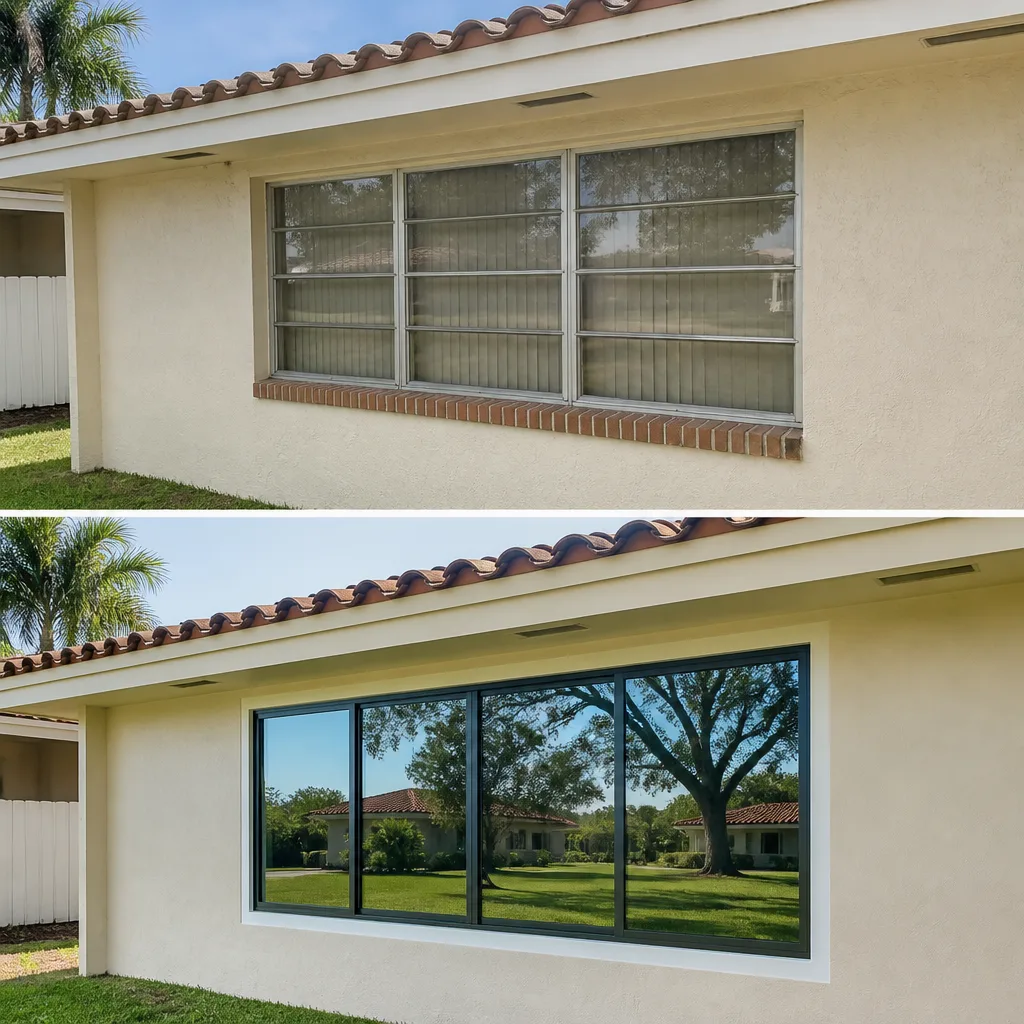
New windows and doors improve comfort, cut energy bills and add long-term value to your home. Sightline Windows & Doors Cutler Bay pairs proven product lines with our own installing crews for lasting performance - and a price we put in writing.
1. Choose your installer
The unit is half the job - the install is the other half. Our own background-checked crews measure, set, seal and insulate every opening, and they know the lines we quote inside and out because they install them every week.
2. Select the right products
Compare styles, materials and glass packages side by side until the fit is right for your rooms, your budget and your goals. The product-line comparison below is the place to start.
3. Prepare your home for install
Before install day we walk you through a short checklist - furniture pulled back, treatments down, a clear path to each opening - so install day is watch-it-happen, not scramble.
Compare the Lines We Quote
Every project is priced on the same lines, side by side - the price indicators below are relative, and your consultant shows exact numbers on your actual openings.
PGTThe line Florida homeowners arrive naming - the most Miami-Dade certifications in the industry$$$
- More Miami-Dade NOA certifications than any other line we quote
- WinGuard, EnergyVue and ClassicVue Max systems built for every wind zone
- 99% on-time delivery keeps your install date on the calendar
CGIThe heavyweight impact line$$$$$
- Large-missile impact ratings for the strictest wind zones
- Architectural-grade aluminum with commercial-depth frames
- The line we quote when protection is the whole point
CWSThe Florida value pick$$
- Vinyl systems built in Florida for Florida codes
- Strong energy packages at the friendliest price point
- The smart start for whole-home replacements on a budget
ESWSlim lines, big glass$$$$
- Narrow-sightline aluminum for modern elevations
- Oversized openings and floor-to-ceiling glass
- Impact-rated without the bunker look
ECOThe aluminum impact workhorse$$$
- Miami-built aluminum impact systems
- A strong price-to-protection ratio for coastal homes
- Proven inventory lines with short lead times
Windows & Doors Permits, Codes & Inspections in FL: What You Need to Know
A window that carries Florida Product Approval can still fail inspection in Cutler Bay if it lacks a Miami-Dade Notice of Acceptance with a matching installation drawing. These are two separate documents, issued by two different entities, and both are mandatory for every opening in the High Velocity Hurricane Zone. Since 2012, we’ve watched out-of-county contractors and do-it-yourself homeowners learn this the hard way - at the rough-opening inspection, with product already on-site. This guide maps the exact path from product selection through final inspection in Miami-Dade County, including Cutler Bay, so nothing gets rejected at the door. For a deeper dive, see our Complete Guide to Windows & Doors in Cutler Bay.
Quick Answer

In Florida, most window and door replacements require a building permit. In Miami-Dade County, including Cutler Bay, you also need products with both Florida Product Approval and a Miami-Dade Notice of Acceptance (NOA). The job then passes three inspections - rough opening, in-progress, and final - before a Certificate of Completion is issued. Skip any step and you risk failed inspections, forced removal, or denied insurance claims after a storm.
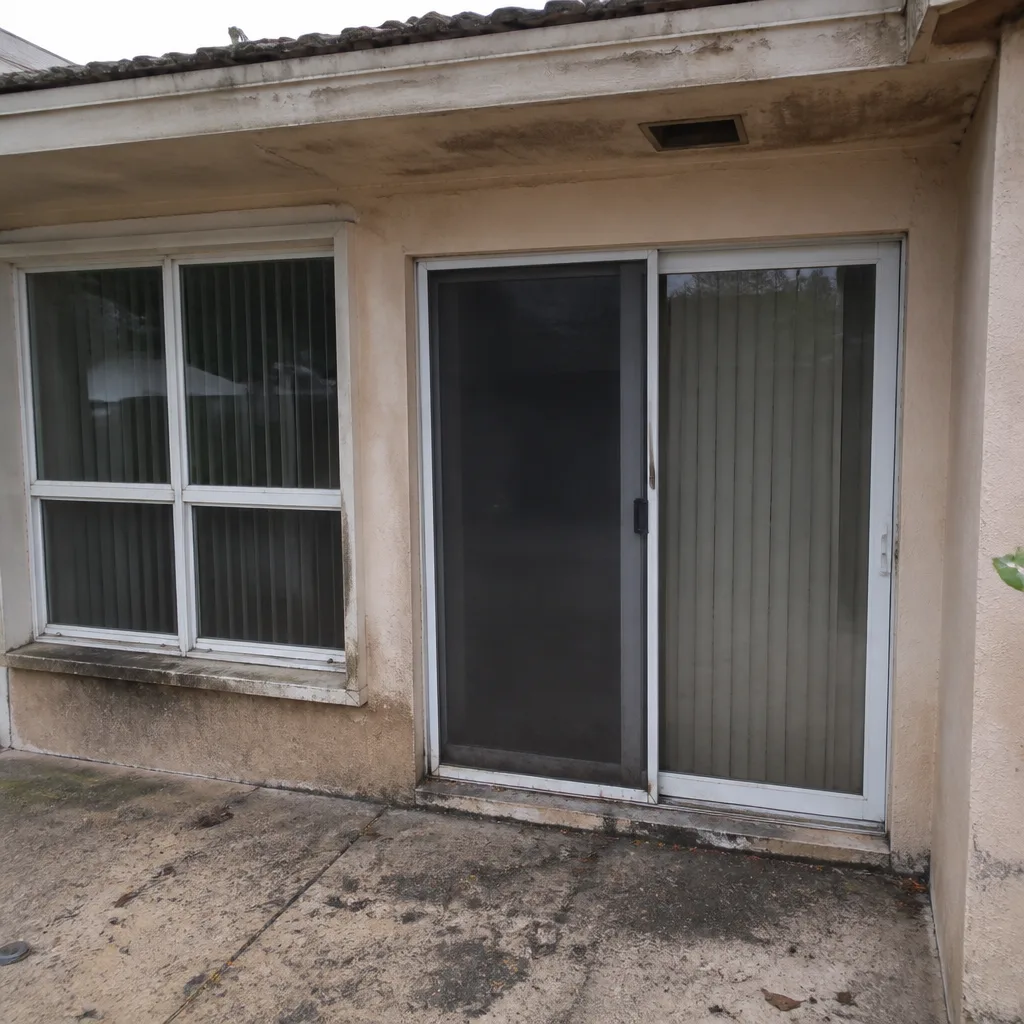 Before
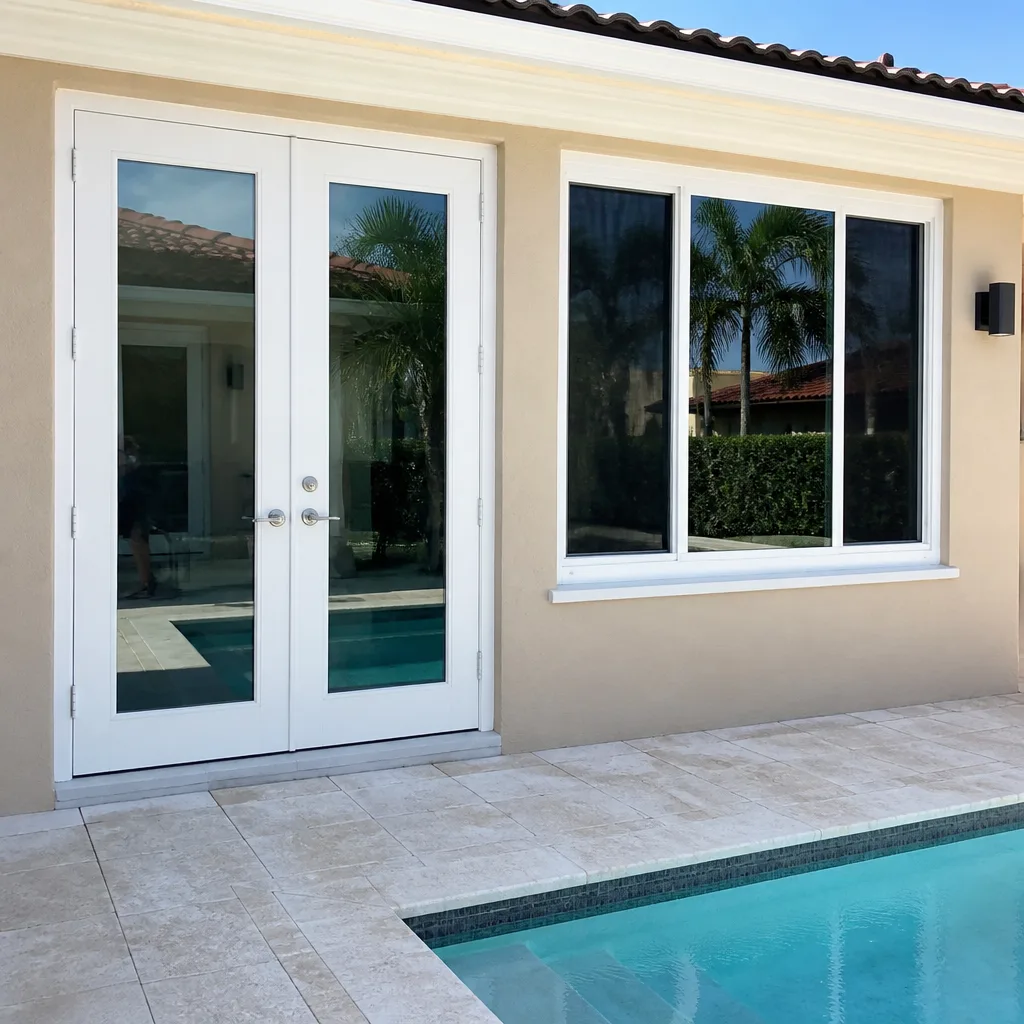 After
AfterTable of Contents
- Florida Product Approval vs. Miami-Dade NOA: The Two-Code Trap
- When Permits Are Required in Cutler Bay
- The Permit Application Process: Who Signs What
- The Three Inspection Stages in Miami-Dade County
- Florida’s Notice of Commencement and Your Lien Exposure
- After-the-Fact Permits: Cost and Timeline When Work Was Unpermitted
- Choosing Compliant Products: What to Verify Before Delivery
- Common Mistakes to Avoid
- When to Call a Professional
- Frequently Asked Questions
- The Bottom Line
Florida Product Approval vs. Miami-Dade NOA: The Two-Code Trap

Florida operates under a statewide building code, but Miami-Dade County adds the High Velocity Hurricane Zone (HVHZ) overlay. This creates a two-code environment that confuses nearly everyone who has not worked inside the county line.
Florida Product Approval is issued by the Florida Department of Business and Professional Regulation. It confirms that a window or door meets minimum statewide standards for wind load, water infiltration, and structural performance. A product with this approval can be installed in Orlando, Tampa, or Jacksonville without additional documentation.
Miami-Dade Notice of Acceptance (NOA) is issued by the Miami-Dade County Product Control Division. It confirms that the same product meets HVHZ-specific criteria: higher wind speeds, stricter impact resistance, and more demanding installation details. The NOA includes approved installation drawings that must be followed exactly.
Here is what catches homeowners and contractors: a product can hold Florida Product Approval without holding a Miami-Dade NOA. The reverse is also possible, though rare. In Cutler Bay, which sits entirely within the HVHZ, both documents are required. The inspector at your door will ask to see:
- The Florida Product Approval number
- The Miami-Dade NOA number
- The specific installation drawing from the NOA that matches your application
We specify window installation in Cutler Bay using products that carry both approvals, and we keep digital copies on-site for every inspection. The PGT and CGI lines we install, for example, maintain current NOAs with multiple installation drawings to match different framing conditions. If your contractor cannot produce these documents before the first tool is lifted, the product should not be on the truck.
The NOA also dictates fasteners, sealants, and flashing details that differ from the statewide code. A #10 screw that satisfies Florida Product Approval may be insufficient under the NOA. We verify fastener schedules against the specific drawing for each opening, not against a generic specification sheet.
When Permits Are Required in Cutler Bay
Not every window or door replacement triggers a permit, but the exceptions are narrower than most homeowners assume.
A permit is required when:
- You change the size or location of an existing opening
- You replace a non-impact window with an impact-rated product, even at the same size
- You replace an exterior door, including patio doors and sliding glass doors
- You install new windows or doors where none existed before
- You alter the structural framing around an opening
A permit is typically not required when:
- You replace a window with an identical unit of the same dimensions and performance rating, in-kind
- You replace interior doors only
- You perform cosmetic work: painting, trim replacement, or hardware changes
In Cutler Bay, the distinction that matters is performance rating. Most homeowners replacing original 1980s or 1990s windows are upgrading to impact-rated products for insurance compliance and storm protection. That upgrade triggers a permit even if the dimensions stay identical. The Miami-Dade Building Department treats the performance upgrade as a material change requiring inspection.
Neighborhoods like Lakes by the Bay and Cutler Ridge saw heavy construction in the 1970s through 1990s, before current HVHZ standards. Those original windows almost never carry impact ratings. When we survey these homes, we flag the permit requirement in the written scope so the homeowner understands the full process before signing.
One additional Cutler Bay-specific factor: properties in the Biscayne Bay flood zone may trigger additional review if the window or door replacement affects the building envelope’s flood resistance. We check FEMA flood maps during our measured survey and note any special conditions on the written quote.
The Permit Application Process: Who Signs What
Florida Statute 489 governs contractor licensing and permit responsibility. Understanding who must sign which document protects you from liability and from jobs that stall in administrative review.
The contractor’s sole responsibility:
- Preparing and submitting the permit application with accurate product specifications
- Attaching Florida Product Approval and Miami-Dade NOA documentation for every product
- Providing proof of insurance and active contractor license
- Scheduling all inspections and ensuring code-compliant work at each stage
- Obtaining the Certificate of Completion or Certificate of Occupancy
The homeowner must sign:
- The permit application itself, as property owner or authorized agent
- The Notice of Commencement (discussed in the next section)
- Any affidavit of owner-builder status, if applicable - though we do not recommend owner-builder status for window and door work in the HVHZ
Under Florida Statute 489.103(7), a homeowner can act as their own contractor for work on their primary residence. This exempts them from certain licensing requirements but does not exempt them from code compliance, inspection schedules, or product approval documentation. We have seen owner-builder permits in Cutler Bay fail inspection because the homeowner specified a product with Florida Product Approval but no Miami-Dade NOA. Before you decide to go it alone, read our DIY vs Professional Windows & Doors: The Cutler Bay Homeowner’s Decision Guide. The exemption from licensure does not create an exemption from the HVHZ overlay.
At Sightline Windows & Doors Cutler Bay home, we handle permit submission as standard practice. The homeowner signs where required, and we manage the rest. The written quote includes the permit fee as a line item, with the actual county fee listed - not a padded estimate. Haven Clause 1 requires that the measurement and the quote are the same document; we extend that to permit costs, with the county receipt provided after filing.
Permit timelines in Miami-Dade vary by application volume. In our experience, standard window and door permits issue in 5 to 10 business days for straightforward replacements. Complex jobs involving structural modification or multiple product types may require plan review, adding 2 to 4 weeks. We do not begin fabrication or scheduling until the permit is in hand, because product cannot be altered after manufacture to match a changed permit condition.
The Three Inspection Stages in Miami-Dade County
Miami-Dade County requires three inspections for permitted window and door replacement. Each has specific documentation requirements and specific failure modes that we have learned to anticipate.
Stage 1: Rough Opening Inspection
The inspector examines the opening before product installation. They verify:
- Framing dimensions match the permitted drawings
- Structural members are intact and properly sized for the load
- Flashings and weather barriers are correctly lapped and sealed
- The approved installation drawing from the NOA is on-site and matches the planned work
Common failures at this stage - which we detail further in our Windows & Doors Warning Signs: A Cutler Bay Homeowner’s Reference Guide - include framing that does not match the NOA drawing’s rough opening dimensions; damaged or missing sill pan flashing; absence of the correct NOA installation drawing. We photograph the rough opening before inspection and keep the photo record with the job file.
Stage 2: In-Progress Inspection
This occurs during installation, typically after the window or door is set but before final sealing and trim. The inspector verifies:
- The installed product matches the manufacturer and model on the permit
- Fastener type, size, and spacing match the NOA drawing exactly
- Shims and supports are in place per the installation detail
- Operable units function correctly
Common failures: substitution of a different product model without permit amendment; fastener schedule that does not match the NOA; missing or incorrect clips or anchors for impact-rated units. We verify the product label against the permit before uncrating and photograph the label for the record.
Stage 3: Final Inspection
The inspector examines completed work for:
- Proper sealant application and joint detailing
- Trim and finish that does not compromise the weather seal
- Operational testing of all moving parts
- Cleanup and protection of the work area
Upon passing, the inspector issues a Certificate of Completion. This document is required for insurance compliance, property sale, and warranty activation with many manufacturers. We provide the homeowner a copy and keep the original in the job file.
In Cutler Bay, inspectors have latitude to require corrective work before signing off. We have seen final inspections fail because sealant was applied in conditions outside the manufacturer’s specified temperature range, or because trim fasteners penetrated the weather barrier. Our crews document ambient conditions and follow the NOA’s environmental requirements literally.
Florida’s Notice of Commencement and Your Lien Exposure
The Notice of Commencement (NOC) is a legal document that records the start of construction work on a property. Under Florida Statute 713.13, it must be filed with the county clerk and posted at the job site before work begins. For window and door replacement in Cutler Bay, this means before the first tool is lifted.
The NOC serves two functions that protect the homeowner:
- It limits lien liability. Without a recorded NOC, subcontractors and material suppliers can file liens against the property for the full value of their contributions, even if the homeowner has already paid the general contractor in full. With a recorded NOC, lien rights are tied to the NOC filing date, and proper payment tracking limits exposure.
- It establishes the official project start date. This date governs warranty periods, insurance coverage, and statutory deadlines for lien claims.
The NOC requires:
- Property owner name and address
- Property legal description
- Contractor name, address, and license number
- Lender information, if applicable
- Project description and estimated value
At Sightline, we prepare the NOC as part of our pre-construction packet. The homeowner signs and records it; we provide the recording instructions and the clerk’s office location. We also supply a notarized copy for posting at the job site, Haven Clause 3 requirement for documented evidence.
One critical detail: the NOC must be recorded before work begins, not after. We have seen homeowners in Cutler Bay attempt to record the NOC after the rough opening inspection, believing the permit was sufficient. The NOC and the permit are separate legal instruments with separate functions. A permit authorizes the work; the NOC protects against lien exposure. Both are required.
The NOC also triggers the contractor’s obligation to provide a Notice of Furnishing to subcontractors and suppliers, which creates the paper trail for payment verification. We manage this documentation for every job, with copies provided to the homeowner at completion.
After-the-Fact Permits: Cost and Timeline When Work Was Unpermitted
Unpermitted window and door work is discovered most often at property sale or after an insurance claim. In both cases, the homeowner faces a structured penalty process that is more expensive and time-consuming than permitting correctly the first time.
Discovery at resale: The buyer’s title company or lender requires a Certificate of Completion for all permitted work. Unpermitted openings trigger a requirement to bring the work into compliance before closing. This means:
- Applying for an after-the-fact permit with the Miami-Dade Building Department
- Exposing the opening for inspection - typically removing interior trim at minimum, sometimes removing the entire unit
- Demonstrating that the product carries both Florida Product Approval and Miami-Dade NOA
- Passing all three inspection stages as if the work were new
- Paying permit fees plus administrative penalties, typically double the original fee
Discovery after a storm claim: If unpermitted windows or doors fail during a hurricane, the insurance carrier may deny the claim based on code non-compliance. Even if the product performed correctly, the absence of a permit and inspection record creates coverage ambiguity that carriers exploit. We have reviewed competitor estimates in Cutler Bay where the scope explicitly excluded permit costs; those homeowners are exposed.
Timeline: After-the-fact permits require plan review even for simple replacements, adding 4 to 6 weeks to the process. The administrative penalty doubles the permit fee. If the installed product lacks Miami-Dade NOA, replacement is mandatory - there is no grandfathering.
Cost range in Cutler Bay: Based on our review of county fee schedules and our experience with after-the-fact resolutions, expect $800 to $2,400 in combined permit fees, penalties, and re-inspection costs for a typical single-family home - before any product replacement. This assumes the original product is compliant. Non-compliant product adds full replacement cost.
Our window replacement in Cutler Bay includes permit acquisition as standard. The written quote lists the permit fee separately, with no markup. Haven Clause 5 - No surprises - means we do not treat permitting as an optional add-on that shifts risk to the homeowner.
Choosing Compliant Products: What to Verify Before Delivery
Product verification is the step where most permit delays originate. We use a four-point checklist before any product is ordered for a Cutler Bay job.
1. Confirm dual approval status
Search the Florida Product Approval database for the specific product series and size. Record the approval number. Then search the Miami-Dade NOA database for the same product. The NOA will list approved sizes and configurations; verify that your exact unit is included. A 36-by-72 inch single-hung may be approved while a 36-by-60 inch unit from the same series is not.
2. Match the installation drawing to the application
NOAs contain multiple installation drawings for different wall types: wood frame, concrete block, steel stud, etc. Identify your wall type and verify that the drawing covers it. The drawing number must be referenced on the permit application and available at inspection.
3. Verify the product label
Every approved window and door carries a permanent label with the Florida Product Approval number and, for HVHZ products, the Miami-Dade NOA number. We photograph this label before installation and include it in the job documentation. Inspectors may request to see the physical label; if it has been removed or painted over, the unit may be rejected.
4. Check expiration dates
Both Florida Product Approvals and Miami-Dade NOAs expire and require renewal. A product that was compliant when a home was built in 2010 may have an expired approval today. We verify current status at the time of ordering, not at the time of specification.
The product lines we install - including PGT, CGI, and Therma-Tru - maintain current dual approvals with broad size ranges. When we specify door installation in Cutler Bay, we select the product by what the opening requires and what the code demands, not by warehouse availability. The measured survey documents wall type, opening dimensions, and structural conditions; the quote specifies the exact product and approval numbers that match.
For custom or geometric windows, approval verification is more complex. Special shapes may require project-specific engineering or a variance from standard NOA drawings. We flag these conditions early and obtain any required documentation before permit submission.
Common Mistakes to Avoid
- Assuming Florida Product Approval is sufficient. In Cutler Bay and all of Miami-Dade County, the Miami-Dade NOA is equally mandatory. A contractor who shows only the statewide approval has not completed product verification.
- Letting the contractor skip the Notice of Commencement. Without a recorded NOC, your lien exposure extends to subcontractors and suppliers you never met. We prepare and explain the NOC before any work begins.
- Accepting a verbal permit commitment without documentation. Ask for the permit number and verify it on the Miami-Dade Building Department website. Unpermitted work discovered later costs significantly more to resolve.
- Ordering product before permit issuance. Permit conditions can change during review, especially for jobs involving structural modification. Fabricated product cannot be easily altered to match changed conditions.
- Ignoring the installation drawing details. The NOA drawing specifies fasteners, sealants, and flashings that differ from generic manufacturer instructions. Using the wrong fastener schedule is a common in-progress inspection failure.
- Failing to obtain the Certificate of Completion. This document is your proof of code-compliant work. Without it, insurance claims and property sales face unnecessary complications.
- Hiring a contractor unfamiliar with HVHZ requirements. Contractors licensed outside Miami-Dade often understand Florida Product Approval but have not worked with Miami-Dade NOAs. Ask how many HVHZ inspections they have passed in the last year.
When to Call a Professional
Call a licensed, insured contractor when your job involves impact-rated products, structural modification, or any work inside Miami-Dade County’s HVHZ. The two-code environment creates compliance requirements that are not intuitive and are expensive to correct after the fact.
Specific scenarios that warrant professional involvement: replacing original windows in a pre-2002 Cutler Bay home; upgrading to impact-rated doors for insurance compliance; modifying opening sizes for improved views or access; installing custom or geometric windows without standard approval documentation; or resolving unpermitted work discovered at sale or after a storm.
Sightline Windows & Doors Cutler Bay offers free estimates in Cutler Bay. Explore more guides & resources on our blog. Every estimate includes a measured survey you keep, a written price before any work starts, and a documented photo record at completion. Call (786) 886-1945 to schedule. We also provide free second opinions on any written estimate from another contractor.
Frequently Asked Questions
Permit fees in Miami-Dade County are based on project valuation. For a typical single-family window and door replacement in Cutler Bay, expect $350 to $850 in base permit fees, plus plan review fees if structural modification is involved. After-the-fact permits carry double fees plus administrative penalties. Call (786) 886-1945 for an exact quote on your specific scope - estimates are free.
In-kind replacement of identical products at the same size may not require a permit under Florida code. However, in Cutler Bay, most replacements upgrade to impact-rated products for storm protection and insurance compliance. That upgrade constitutes a material change and triggers the permit requirement. We verify permit status during our measured survey and include the determination in writing.
The inspector issues a correction notice with specific deficiencies. You have a limited window to correct and schedule re-inspection, typically 30 days. Each re-inspection carries a fee. Repeated failures can trigger escalation to a supervisor review. We pass inspections by verifying product, documentation, and installation details before the inspector arrives, not by attempting corrections after failure.
Yes, for every exterior window and door installed in Cutler Bay and all of Miami-Dade County. The Florida approval covers statewide standards; the Miami-Dade NOA covers HVHZ-specific requirements. Both documents must be current, and the specific product size and configuration must be listed in each. We verify this dual status before ordering any product.
For a straightforward replacement with no structural changes, plan 3 to 5 weeks: 1 to 2 weeks for permit issuance, 1 to 2 days for installation after scheduling, and 1 to 2 weeks for inspection scheduling and completion. Structural modifications or plan review add 2 to 4 weeks. After-the-fact permits add 4 to 6 weeks minimum. We provide a written timeline with every quote.
Insurance carriers increasingly verify permit and inspection records before paying storm damage claims. Unpermitted work, even if performed correctly, creates coverage disputes that delay or deny payment. The Certificate of Completion from your final inspection is the documentation carriers request. We provide this document to every homeowner and retain a copy in our records.
Contractors licensed in other Florida counties can work in Miami-Dade, but they must understand and comply with Miami-Dade’s HVHZ requirements. We have reviewed jobs where out-of-county contractors specified products with Florida Product Approval but no Miami-Dade NOA, resulting in failed inspections and replacement costs. Ask any contractor how many Miami-Dade HVHZ inspections they have passed, and verify their license status with the Miami-Dade Contractor Licensing Section.
The Bottom Line

Florida’s statewide building code is the starting point, but Miami-Dade County’s HVHZ overlay raises every requirement for homes in Cutler Bay. Successful window and door installation requires two product approvals, three inspection stages, and proper legal documentation before work begins. The cost of getting it right the first time is modest compared to the expense and delay of after-the-fact correction. Document every step, verify every product, and keep the paperwork that proves compliance.
Written by Sonia Raman, Owner at Sightline Windows & Doors Cutler Bay, serving Cutler Bay since 2012.
Six Reasons Homeowners Choose Sightline Windows & Doors Cutler Bay
Impact systems engineered to design pressures up to +/-100, matched to your wind zone - your openings hold when the storm arrives.
Low-E insulated impact glass from our manufacturer lines commonly cuts monthly cooling bills 20-30%.
Laminated impact glass shuts out up to 40% of outside noise - traffic, neighbors, weather.
Monitoring services run $30-90 a month. Laminated impact glass resists forced entry around the clock, with no subscription.
Florida homeowners average around 25% savings on the windstorm portion of their policy after protecting every opening - some homes qualify for more.
A full impact package upgrades curb appeal, buyer confidence and appraised value in one project.
Other Sightline Windows & Doors Cutler Bay Services